SIA Investment in Air India:
Learning from Past Mistakes?
Jun/Oct 2026


Singapore Airlines (SIA) is a paragon in aviation and is regularly acknowledged as one of the world’s best international airlines. Its attention to high-quality passenger service gains it many honours. It is well managed and generally profitable: in the last few years since recovering from the pandemic it has achieved some of the highest operating margins in its history.
But it has a physical limitation. The island state of Singapore has a land area of 744km² — roughly the same size as New York City, half the size of the Greater London metropolitan area, or a third the size of Tokyo. There are two airports — the main international hub gateway of Changi (which takes up 3% of the island’s available land), and Selatar airport with a single 1.8km runway serving turboprops and general aviation — and (obviously) no domestic air services.
From its earliest days, after splitting from Malaysia-Singapore Airlines in 1972, SIA built a hub and spoke system at Changi to take advantage of 6th Freedom services though Singapore (particularly on the kangaroo route between the UK and Australia), and in one sense was the same archetypal disuptor to the established industry in the 1970s as the Gulf superconnectors became in the 2000s. It angered its competitors by establishing a significantly higher level of customer service at low prices, with many cheaper tickets offloaded through bucket shop travel agencies. This of course went totally against the rules as laid down by IATA — but SIA did not join the trade association until the early 1980s.
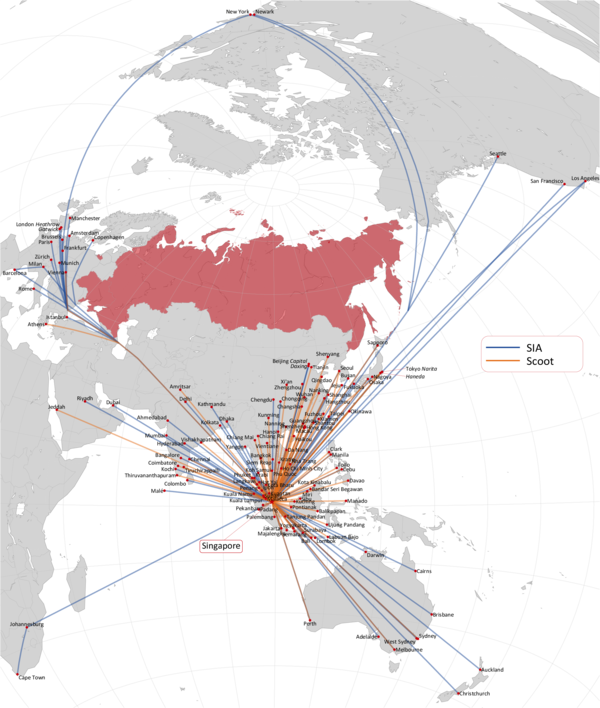
Over the years it has tried many times to expand out of its home base by buying equity stakes in other airlines in order to create a multi-hub system. Its latest such move has given it a 25% stake in the newly privatised Air India.
Historically however it has been constantly hindered by the ownership and control rules that underpin international airline operations. This has meant it is limited to a minority investment and a lack of board room power. None of its investments has so far been financially successful. Will Air India be different?
| Equity investment | Divestment | Recognised | |||||
|---|---|---|---|---|---|---|---|
| Year | Airline | Stake | Value | Year | How | Value | Gains (Losses) S$m |
| 1999 | Virgin Atlantic | 49% | £600m | 2012 | Sold to Delta | £224m | (750) |
| 2000 | Air New Zealand | 25% | NZ$426m | 2004 | Diluted to 6% on ANZ failure following collapse of Ansett | NZ$62m | (221) |
| 2007 | Tigerair Australia∗ | 2014 | Offloaded to Virgin Australia | A$1 | (60) | ||
| 2012 | Virgin Australia | 23% | A$228m | 2020 | Written off in COVID inspired bankruptcy | A$0 | (350) |
| 2014 | NokScoot (Thailand)† | 2020 | Liquidated, without ever returning a profit, following pandemic | (124) | |||
| 2014 | Vistara‡ | 49% | US$50m | 2025 | Merged into Air India§ | 1,100¹ | |
| 2025 | Air India | 25% | (945)² | ||||
A history of failed investments
- Virgin Atlantic. SIA acquired a 49% stake in Virgin Atlantic in 1999 for £600m. The idea was to enable it to access traffic on the Atlantic, having been stymied in attempting to get 5th freedom rights from Heathrow. Through the next decade Virgin displayed little growth — passenger numbers fluctuating between 5.4m and 5.7m a year — and financial returns were minimal, with operating margins in the low single digits. And then, in the four years following the Global Financial Crisis of 2008, the airline managed to lose a total £200m at the net level. SIA offloaded its investment to Delta Airlines in 2012 for £224m having recognised total losses of S$750m on its own balance sheet.
- Air New Zealand. Singapore took a 25% stake in Air New Zealand for NZ$426m in 2000, having been foiled by them in an earlier attempt to acquire 50% of Ansett Australia (by then owned by ANZ). The concept behind the investment was to provide it with a pathway to broader access to a strategically important region in Australasia. Air New Zealand was bailed out and renationalised by the Kiwi government in 2001, significantly diluting SIA’s stake. It finally exited in 2004 selling its remaining interest for NZ$62m and having recognised losses of S$221m.
- Virgin Australia. SIA took an initial 10% stake in Virgin Australia in 2012 as the airline tried to reposition itself as a full service competitor to Qantas. It raised its stake to 19.9% the following year, acquiring shares from Branson’s Virgin Group, and then gradually further over the next few years through equity swaps in the open market to peak at a 23% holding by 2026. Virgin Australia had reported a profit for 2012, but the remainder of the decade proved consistently loss-making. Severely fiscally challenged at the start of the pandemic, Australia’s second airline collapsed into bankruptcy in 2020. SIA recognised a total S$350m losses.
- LCC forays. Tigerair Australia’s story is somewhat convoluted, that of NokScoot (a long haul low cost JV in Thailand) less so. Both failed causing writedowns of S$184m.
SIA’s investment strategy is a long way from the failed “Hunter” strategies of Swissair and Etihad, which brought those carriers to their knees. The carrier remains healthily financed (with the backing of the State’s holding company Temasek).
Will Air India break the run?
Singapore Airlines in the past decade has focused its attention to India, citing the highest growth potential in aviation. It set up a full service domestic Indian carrier, Vistara, in cahoots with Tata Group, in 2014 in which it had a 49% minority stake, nominally with an investment of $50m. Following Tata’s successful 2021 bid for Air India, Vistara was merged into Air India in 2024 providing SIA with a 25% stake in the newly privatised flag carrier. The company claims that its involvement is justified because it provides a solid “multi-hub strategy”. Vistara, probably because of its high rate of growth, had been consistenly loss making having lost a total ₹9,500 crore (US$1.2bn) over the decade. Strangely the merger resulted in a paper gain in SIA’s FY2025 accounts of S$1.1bn.
But Air India has been beset by problems since its privatisation. The fatal crash of AI171 in June 2025 claiming 260 lives was a massive disaster. It has also intensified regulatory attention and scrutiny: reports from DGAC finding aircraft being flown without valid airworthiness review certificates, errors in pilot training and crew exceeding permitted hours, while a report of a pilot flying under the influence of marijuana led to company wide drug-screening of the pilot corpus (which revealed two more miscreants).
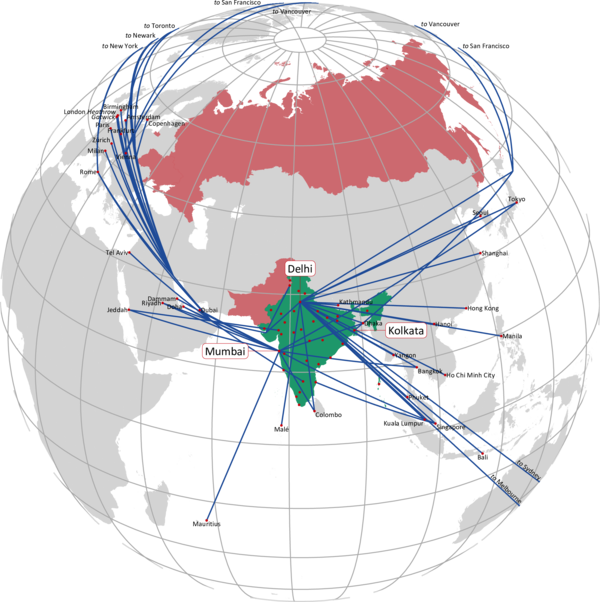
Diversions to avoid restricted airspace (Pakistan, Russia, Ukraine) thanks to flightpaths.com.
Moreover, Air India is heavily operationally challenged by the closure of Pakistan’s airspace to Indian airlines in April 2025: this forces a multi-hour diversionary route for all its flights to key destinations in the Arabian Gulf, Europe and the US.
On top of this the carrier is struggling in its attempts to retrofit its legacy fleet to bring the interiors up to a consistent customer service quality because of continuing supply chain constraints.
Air India is reported to have produced its first positive EBITDAR result since privatisation in the financial year to end March 2025 (the year of the merger with Vistara), but net losses still came in at ₹10,900 crore. For FY 2026 losses more than doubled to ₹22,200 crore (US$2.8bn) representing a negative net margin of 25% of revenues. SIA recognised a hit of S$945m as its share of the losses.
Following the massive losses for FY2026 the Air India board requested a new capital injection from its shareholders of US$1.5bn. Tata Group quickly agreed to allocate its $1.1bn, but SIA’s $377m share of the requested cash caused a political backlash in Singapore. Because Singapore’s sovereign wealth fund, Temasek, is the majority shareholder of SIA, opposition politicians questioned why Singaporean capital was being funneled into a heavily loss-making foreign entity. The Singaporean government and Transport Ministry firmly defended the Air India partnership, emphasizing that overseas expansion is critical for SIA’s long-term survival. They clarified that no taxpayer money or fresh Temasek funds are being used for this turnaround, and the money would come from SIA’s internal resources.
As a 25% shareholder, SIA has limited influence. It might have had a friend at the top of the company. Campbell Wilson, a 25 year veteran of the SIA Group (and former CEO of Scoot) became the CEO of Air India following privatisation, but he resigned in April. Tewolde Gebremariam, former CEO of Ethiopian Airlines, took over the reins at the beginning of October.
But the political broohaha has emboldened SIA to add tough conditions to try to get more sway over its investment. Reports from Reuters suggest that SIA is demanding significantly tougher commercial and governance terms before approving the cash call and is focusing its demands on securing more control over how its money is spent and ensuring a clear timeline toward profitability:
- Greater Board Voting Power: Despite holding a 25.1% share block, SIA originally secured only a single board seat. To protect its cash injection, SIA is apparently demanding expanded voting power and more robust veto rights over major capital expenses.
- Stronger Corporate Governance and Management Influence: Following recent safety scandals and regulatory compliance lapses under Air India’s previous leadership, SIA wants a greater say in appointing key operational executives and establishing independent oversight panels.
- Strict Loss-Reduction Milestones: SIA is demanding that further capital payouts be staggered or tied to hard performance targets. Air India must meet explicit, binding targets to narrow its financial losses rather than using the fresh capital as an open-ended safety net.
- Operational Accountability under New Leadership: The demands coincide with the appointment of the new Air India CEO, Tewolde Gebremariam. SIA expects the fresh capital to be strictly partitioned for resolving the fleet upgrade and renewal, rather than just covering day-to-day expenditure.
What if an agreement isn’t reached?
SIA holds roughly S$8.3 billion in internal cash reserves, meaning it has the liquidity to pay its $375 million pro-rata portion. However, because the capital request does not automatically oblige SIA to fund it, the airline has several structural options if Tata rejects its conditions:
- Staged Funding: Compromising on a much smaller, phased equity rollout that is unlocked only as Air India hits specific turnaround targets.
- Dilution: Holding firm and refusing to fund the call altogether. Tata (which has already approved its own US$1.1 billion chunk) would have to cover the remainder, which would dilute SIA’s equity stake below 25%.
- Strategic Shift: Protecting immediate cash and relying strictly on the expansive SIA-Air India Commercial Cooperation Agreement signed in early 2026 to capture passenger revenue without holding heavy equity risk.
