The Regulation of Air Transport.
From Protectionism to Liberalisation,
and Back Again?
Mar/Apr 2023

It is sometimes difficult to remember, even for us ‘oldies’, just how restrictive air transport used to be. The economic regulatory environment which emerged from the Chicago Conference of 1944, and survived for many years thereafter, was characterised by strict government control over tariffs, routes and capacity, State ownership of most major airlines and open collusion on fares and schedules (not only permitted, but usually actually required by governments). The predictable result was an inefficient, loss-making industry focused on the interests of producers rather than consumers.
I recall in the late 1970s, over 30 years after Chicago and despite the impact of US domestic deregulation, attending several meetings of the European Civil Aviation Conference, along with representatives of other countries and their airline minders, to discuss the filing of air tariffs. The norm at the time was for the flag carrier of one State to file proposed fares with its national authority on behalf of both itself and its opposite foreign partner on a route. The foreign airline would reciprocate with its authorities. In other words, for the London — Paris route, for example, BEA/British Airways would file fares for itself and for Air France with the UK Civil Aviation Authority and Air France would do likewise with the French Government. The proposal was that airlines should be allowed to file their own fares in both jurisdictions. Just file them, put them in the post; there was no expectation that the fares filed by a foreign carrier would actually be approved unless the national airline agreed. After several meetings it was concluded that this was far too radical a reform to be contemplated.
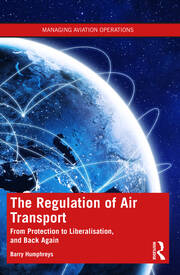
Much of this has changed over the years, of course, with deregulation/liberalisation and open skies bilateral air services agreements. My recently published book (‘The Regulation of Air Transport. From Protectionism to Liberalisation, and Back Again.’ Routledge, 2023) traces the development of the economic regulation of the aviation industry from the protectionism of the Chicago era to the more liberal, competitive environment we see today, as well as addressing many of the problems the industry will face going forward. Airports, air transport management, the environment and technological developments are all discussed, but it is the evolution of the airline sector, the core of the whole industry, which is most controversial.
Today we are used to the low-cost airline model, highly competitive with prices changing almost constantly and carriers willing to enter and leave markets with hardly a second thought. The fact that such a model would have been impossible under the old tightly regulated regime is a clear indication of the progress which has been made. How could Ryanair or easyJet operate if their fares had to be submitted for approval by two governments months in advance? How could they test new markets when governments restricted access to protect their State-owned legacy carriers? It is just unthinkable.
Yet despite the progress towards a more liberal regulatory environment, which has certainly brought benefits for all stakeholders, not least the travelling public, two policies of the old protectionist era remain, and act as serious inhibitors for the health of airlines. The first is the fact that unlike the rest of the aviation industry, airlines remain loss makers overall. Even during the period immediately before the outbreak of the Covid epidemic, certainly one of the more prosperous times for the industry, according to IATA only 30 airlines in the world earned their cost of capital.
Companies that do not earn their cost of capital on a regular basis are not sustainable in the longer term, at least not without external support. And that, of course, is precisely what has happened with airlines, decade after decade. Airlines have been repeatedly saved by government bail-outs and/or Chapter 11-type bankruptcies. This is not a viable, sustainable industry in its present form. Airlines are reputed to have destroyed more capital than they have created since the first Wright Bothers flight. Little wonder that Warren Buffett once remarked that Karl Marx couldn’t have done as much damage to capitalists as Orville did.
The main reasons for such a poor financial performance is to be found in the second hang-over from the Chicago era. The failure of the Chicago negotiators to agree to a multilateral economic regulatory regime, combined with the acceptance of complete State sovereignty of the skies above their territories, led directly to bilaterally-agreed Air Services Agreements. Core to these agreements, designed to prevent third country free riders from taking advantage of what had been negotiated, were the rules governing who could own and control an airline. It is these rules, mostly still in existence today, which have determined the structure of the airline industry and its persistent lack of profitability.
It was perhaps understandable that initially airlines should be very much nation based. They were, after all, regarded as being of strategic importance and were reliant on government largesse, financial as well as regulatory. Yet to this day carriers remain overwhelmingly nation based. This most international of industries does not contain a single truly global company such as is found in most other major sectors. Attempts to achieve many of the benefits of cross-border mergers by means of global alliances have been of only limited success. Even within the EU internal aviation market, with its concept of a Community Carrier, the full benefits of international consolidation have been difficult to achieve because of complicated governance procedures put in place in attempts to overcome the ownership and control rules.
If proof was needed of what could be achieved by reforming these archaic regulations, one only has to look to the US market. For many years US carriers were the financial basket cases of international aviation, losing more money as a group than airlines in any other region. By the time of the emergence of the Covid epidemic, however, they had been transformed into the most profitable carriers. Why? Because they were able to consolidate among themselves, unaffected by cross-border ownership and control restrictions, so that today just four airlines account for some 80% of the large US market. There is no reason to believe that similar progress could not be made internationally if the ownership and control rules could be reformed.
Open skies agreements represented a major step towards ‘normalising’ international air transport, but they have failed to address two issues: cabotage services and, especially, airline ownership and control rules. The problem today is that further progress towards liberalising the industry has come to a halt. Ownership and control reform really requires multilateral agreement, which inevitably is extremely difficult to achieve; bilateralism simply doesn’t work in this context. The great hope was the EU/US negotiations to create a trans-Atlantic Open Aviation Area, but they failed because of US protectionist lobbying. Despite some chipping away at the margins, in South America for example, there is nothing else on the horizon which offers hope of fundamental reform.
This is a pity given the benefits which reform would produce. However, an additional problem is that not only has progress come to an end, there is a real risk that we could go backwards. Protectionism is on the march again, typified by the campaigns in Europe and North America against expansion by the Gulf carriers, including all the old protectionist arguments from earlier decades. The immediate threat in this case may have passed, but it is by no means dead. Similarly, aviation cannot isolate itself from the anti-globalisation arguments which are increasingly dominating international trade debates.
Other negative factors include the impact of Brexit and the higher costs which inevitably will follow future technological innovations and environmental measures. Brexit is relevant because the European Union has been a major proponent of further liberalisation in its negotiations with third countries. The fact that the EU Commission was able to maintain such a policy in the face of opposition from more conservative Member States, especially France and Germany, owes much to the support it received from the UK. That support is no longer present in the internal EU debates which determine negotiating mandates.
Technology advances have been one of the key characteristics of the aviation industry since the Wright Brothers, driving down unit costs (and therefore fares) and helping to counter airline inefficiency prior to deregulation/liberalisation/open skies. It is difficult today to identify new technical break-throughs, at least ones that will bring efficiency improvements to match the introduction of the jet engine and wide-body and twin-engined long-haul aircraft. The principal focus is quite rightly on reducing aviation’s impact on the environment, but this will almost certainly result in higher not lower costs.
The environmental movement, with its anti-aviation agenda, is clearly here to stay. While the financial crisis of 2008/09 led to the public becoming less concerned about the environment and focussing more on issues related to the economy and job creation, something which lasted several years, the post-Covid period has seen no such reaction. The environment remains a key factor in the political debate in many countries and the aviation industry will have to accommodate that. The jury is out, to say the least, on whether it will succeed in becoming carbon free, but there can be little doubt that whatever happens, costs will increase. The technology, the fuel and the probably inevitable environmental taxes will all lead to higher costs and therefore higher fares, and therefore to demand lower than it would otherwise have been. In the absence of discovering that basic economics has been wrong all along, there does not seem to be any other outcome.
The history of the aviation industry over the past century or so has been remarkable. Particularly since the end of the Second World War, it has expanded substantially and by reducing fares has essentially democratised international air travel. The question arises, however, whether such progress is coming to an end. Further liberalisation may be a challenge too far, and combined with growing protectionism and higher costs and fares mean that the future may be far more challenging. Hardly an optimistic view of the future, but possible an accurate one.
