United goes Boom:
A Passion for Superspeed
June 2021

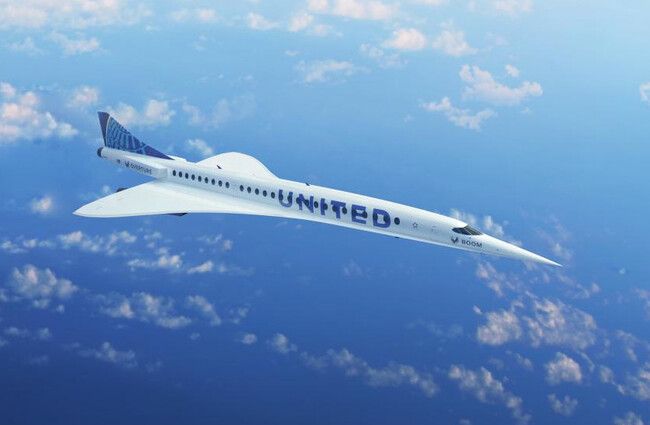
Amidst great fanfare at the beginning of June, United Airlines announced that it had decided to go supersonic. It has agreed to acquire 15 Overture aircraft (with options for an additional 35) from start-up manufacturer Boom Supersonic for delivery from 2029, giving it the opportunity to provide services between for example New York and London in three and a half hours for the first time since Concorde’s last flight in 2003.
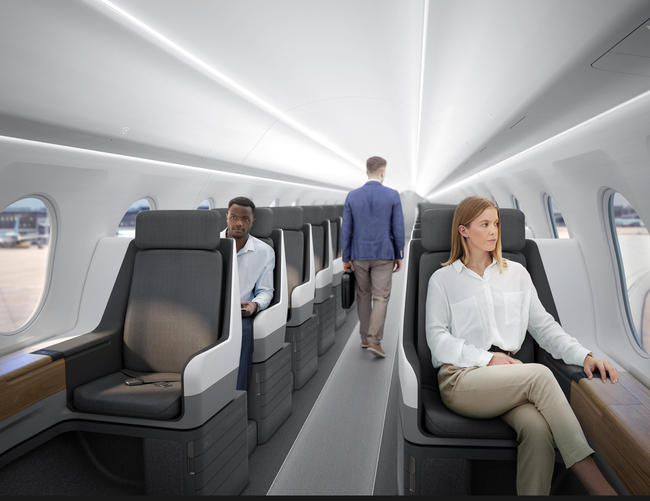
The aircraft is still in the process of being designed. The current specifications suggest a single aisle fuselage with seating for 65-88 passengers in a 1x1 format, flying at an altitude of up to 60,000ft at a speed of Mach 1.7. Could it be a realistic successor to the iconic Anglo-French Concorde?
Boom Supersonic was established in Denver in 2014, the brainchild of founder and CEO Blake Scholl — a man seemingly passionate about speed of travel, but with little clear background in aviation. He started his career at Amazon in 2001 as a software engineer (he proudly states that he introduced Amazon to Google’s AdWords programme) and went on to join the Bezos-backed Pelago mobile app start-up; subsequently founding his own, Kima Labs, acquired by Groupon in 2012.
He does fly though: he started flying for fun in college and acquired his private pilot’s licence in 2008 and instrument rating in 2011. But he says that he has only seen Concorde in a museum.
Although only eight years' old, and never having built a passenger plane, Boom states that it had $270m in funding at the beginning of 2021 with investors that include Bessemer Ventures, Prime Movers Lab, Emerson Collective, Celesta Capital and American Express. In 2016 it announced that Virgin Group had inked a deal to take the first ten aircraft (and Virgin Galactica, which itself is developing a Mach 3 aircraft, would help to build it); in 2018 JAL took options for 20 aircraft and invested $10m saying it “will assist efforts to hone the aircraft’s design and passenger experience”. Boom states that it has an order book, including purchases and options, of 70 aircraft — but only mentions three customers: United Airlines, JAL and the US Air Force.
The company’s plans suggest a rollout of the first Overture aircraft in 2025 and its first flight in the following year. Given the certification and testing processes, commercial passenger flights could possibly start in 2029.
Boom has built one aircraft — the XB-1 — which it proudly claims to be the world’s first independently developed supersonic jet. This is a “demonstrator” aircraft: a piloted test aircraft built to prove key technologies and materials for efficient supersonic flight. 71ft long and powered by three GE J85-15 engines it was rolled out in October 2020, is currently undergoing ground testing with flight testing anticipated for late 2021 or early 2022.
Concorde was the flagship for British Airways and Air France, but as an aircraft programme it was a resounding failure. The development costs of the programme exceeded £1.1bn sixty years ago, funded by the British and French governments. 16 production aircraft were built at a cost of £654m, of which £278m was recovered through sales returns. Only 14 of the type were used in passenger service — seven each by British Airways and Air France.
It was also exceedingly expensive to run. Half of its 95-tonne fuel capacity was used getting off the ground and through the sound barrier. For those of us who have been lucky enough to have flown on Concorde, the experience is unforgettable: a kick of acceleration on the runway from the afterburners to get the aircraft airborne; momentary weightlessness immediately after take-off as the reheat was switched off to reduce noise; another kick of acceleration to push through the sound barrier into peaceful cruise 11 miles above the earth’s surface.
Blake Scholl is adamant that Boom’s Overture will operate at a quarter of the costs of Concorde and that airlines will be able to operate the aircraft profitably at business class prices (referring to fares — pre-Covid — of $5,000-$6,000 on the Atlantic).
A prime reason behind this claim is the significant technological developments made in the sixty years since Concorde was on the drawing board. Scholl has more advanced methods than slide-rules, pens and paper.
Boom will use composites to get around the limitations of aluminium and the extreme aerodynamics needed at supersonic speeds. At cruise Concorde’s hull temperature would reach 100°C, leading edges 105°C, and the nose 127°C — and this with outside air temperatures of -56°C. For this reason it had to be painted white. It would also be up to a foot longer at cruise than when on the ground. (On my first flight on Concorde I sat in a window-seat to glory in the view of the curvature of the earth and deep- to light-blue gradient of the sky at 56,000ft. Never again: it was just too hot.)
But in claiming operating costs to be a quarter of Concorde’s, Scholl is possibly being a little disingenuous. Unit operating costs in the industry have fallen by an average annual 2% in real terms, and that rate compounded over the 45 years since Concorde first flew mathematically produces a 70% reduction.
Boom cannot get away from the fact that its aircraft will be very thirsty: it takes a lot of power to reach the speeds to broach the sound barrier. It says Overture will be powered by three medium by-pass turbo fan engines each providing thrust of up to 20,000lbs (efficient high-bypass fans will apparently not provide the aerodynamics required, while having three engines presumably removes the complications of ETOPS certification) and has teamed up with Rolls-Royce to find, or design, the right powerplant.
But to offset environmental criticism, Scholl has stated that the aircraft is being designed from the start to operate entirely on sustainable aviation fuels (SAF) and that it will through this, and an offset programme, be carbon neutral. Unfortunately, at the moment, SAF are at least 50% more expensive than jet kerosene.
In 2018, the International Council on Clean Transportation (ICCT) published a paper estimating the likely fuel efficiency of potential new SST aircraft, comparing it with current (2017) fuel efficiency on the Atlantic, and trying to verify Scholl’s claim of business class pricing. Their conclusion was that it could produce a fuel efficiency of around 7 passenger kilometres per litre (see chart), very similar to what Concorde achieved when it flew, and similar to British Airway’s all-business class A318 operation between London City and New York (introduced in 2009 as a surrogate for Concorde, but which had to refuel at Shannon westbound).
This first Overture aircraft will be an all-premium aircraft — but the premium it will provide will be time and not necessarily comfort (Scholl has ambitions for later generations of faster, bigger equipment with economics that would favour economy class pricing) — and it will under current regulations only be able to operate efficiently on transoceanic routes. Any operator will price it at a significant premium to business class fares.
Premium class long haul operations have been tried before and seem to do well in the good times. But, for network carriers, removing some premium demand could reduce some of the flexibility needed to maximise flight revenues on existing subsonic flights.
Boom makes the assertion that “there are more than 500 supersonically viable routes airlines can profitably fly” without giving any evidence.
Concorde in the 1980s and 1990s was only able to sustain three routes consistently: twice daily London to New York (representing 4% of the total seats on the route), daily service Paris to New York (c8%), a weekly service London to Barbados (7%); and the daily London-Washington service of the 1980s had petered out by the following decade.
A further complication for estimating demand is understanding that supersonic flight involves time travel. A west-bound supersonic flight from London to New York could take 3.5 hours to cover five time zones, letting you land an hour and a half before you took off (local time). So for example the 6pm Concorde departure from Heathrow would give you a full day’s work in London and allow you to make a dinner appointment in New York. The eastbound service was the converse: to arrive in time to beat the airport curfews and allow you time to get home or to your hotel, the last flight time possible was 1pm out of New York (too early to allow meaningful morning work) and arrive in London 8.5 hours (local time) after you left. Many who took the eastbound service would prefer an overnight subsonic flight on the return to maximise working time, and Concorde’s eastbound load factors tended to be significantly lower than the westbound.
Another factor to consider is that the premium value of supersonic services — time — is only really apparent for direct point-to-point O&D markets. Long haul air travel is a small part of the total market. In normal times it accounts for less than 10% of demand, and there are very few long haul markets with strong O&D demand. On the Atlantic for example New York and London stand-out supreme. London lays claim to ten of the top 12 long haul O&D routes: and London has twice the level of O&D demand as Paris, which in turn has more than twice the level of demand at Frankfurt. Many long haul services require feed at one (or both) ends of the route. Taking transfer times into account the time advantage of speed on one leg of a route dissipates.
The presentation material accompanying United’s announcement proposes the opportunity of Newark to London in 3h30m instead of 6h30m, to Frankfurt in 4h in place of 7h; and San Francisco to Tokyo in 6h compared with the usual 10h15m (although this route, with a length of 8,246km, is a little beyond Overture’s planned range and would presumably have to weight-limited or require a refuelling stop).
And in one of Boom’s promotional videos, Scholl waxes lyrical about a flight from Los Angeles to Sydney in 8 hours (even though this would involve a refuelling stop in Honolulu).
Furthermore, Boom’s plans were developed before the Covid pandemic struck. Corporate travel has been significantly hit, and possibly permanently. It will resume, but the effectiveness of online video-conferencing and remote working through the pandemic has taught corporate entities that travel budgets can be cut without necessarily affecting productivity. Corporate premium air travel will probably have recovered beyond pre-Covid levels by 2029, but the economic drivers influencing it will have changed.
In addition, there is a substantially increased emphasis on corporate entities to take account of their ESG credentials — and air travel is at the top of the list of industries with a high carbon footprint (no matter the use of SAF). Not all premium travel is corporate and not all corporate travel is premium, but the post-Covid recovery may well see a very different pricing structure on long-haul operations and particularly the Atlantic.
The long term prospects for Overture may not be as great as Scholl believes. The risks are high. He needs an engine (he’s partnered with Rolls-Royce which has its own post-Covid problems); he’s planning to manufacture a supersonic aircraft for service within fifteen years of concept (Bombardier’s attempt to produce the C-Series killed their aviation division); he has yet to demonstrate a clear view for pilots on the peculiar take-off or landing of a delta-wing aircraft (Concorde’s nose was designed to droop for that purpose); he has yet to find the billions of dollars needed to build them (Aerion Supersonic, even with $11bn of orders for its Mach 1.4 private jet, folded for that reason in May). But he has vision.
United has an escape clause in the agreement: it will only take the aircraft “once Overture meets United’s demanding safety, operating and sustainability requirements”.
The agreement with Boom pales into insignificance in comparison with United’s decision at the end of June to order 200 737MAX from Boeing and 70 A321neos from Airbus. But United has achieved some excellent publicity.
| Overture | Concorde | |
|---|---|---|
| First service | 2029 | 1977 |
| Price | $200m | $46m |
| Fleet size | 1,000? | 14 |
| Routes | 500+ | 3+ |
| Cruising altitude | 60,000ft | 60,000ft |
| Range | 4,250nm (7,871km) | 3,600nm (6,667km) |
| Speed | Mach 1.7 / c1,900kph | Mach 2.0 / c2,200kph |
| Seat capacity | 65-88 | 100 (+2.5t cargo) |
| Flight crew | 2 | 3 |
| Cabin crew | ?4 | 9 |
| Length | 205ft / 62.4m | 203ft9in† / 62.1m |
| Wingspan | 60ft / 18m | 83ft8in/25.5m |
| MTOW | 77 tonnes | 185 tonnes |
| Power plant | tbd ? Rolls-Royce | Four Rolls-Royce/Snecma |
| (Three medium-bypass turbofans | Olympus-593 turbo jet | |
| ea ?20,000lb without reheat) | ea 38,000lb thrust w reheat | |
| Fuel efficiency | ?? | 7 RPK/litre |
Notes: † ICCT estimate of a reference supersonic jet. ‡ based on the BA all-business class operation between London City and New York.